
IMVU Shop

"Social connections made with ease and intention"

"Social connections made with ease and intention"

Role

Director, Product Design

Timeline

6 months

Scope

Shop

Fitting Room

Web/Desktop

Teams

1 Designer

Engineering

Product
Problem

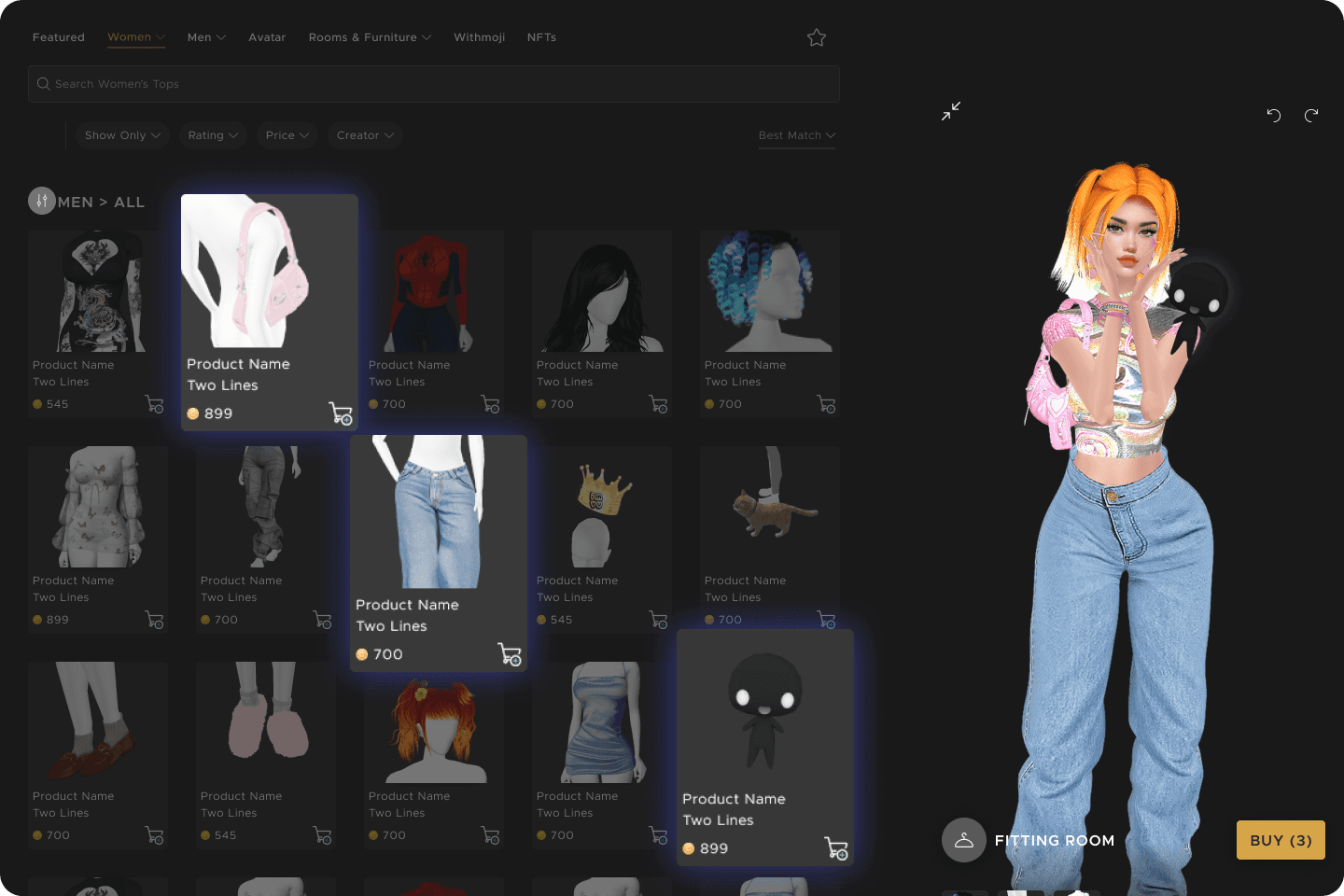
IMVU Shop is a UGC marketplace where users can purchase items from creators on the platform. Everything from clothing to looks all the way to rooms and furniture. We were lacking a more seamless way to engage shoppers with previewing and purchasing. The overall areas that needed to be addressed was our purchase flow, content discovery, and fragmented previewing experience.

Goals

  • Simplify the overall shopping experience to get users to purchase — less is more

  • Design for a combined fitting room and shopping experience

  • Ideate a more trustworthy and clear transaction flow

  • Design for curation, personalization, and content variety

Plan

Discover

Design

Align

Support

Approach

Collaborated 1:1 with my senior product designer to ideate towards concepts on how to bring together the experiences and approach product with solutions that would bring alignment and constructive feedback. Some guiding principles were to ensure:


  • Creating less complexity due to experiences being combined

  • Transactions following typical PoS structure for familiarity

  • Don't go too far into recommended content due to scope restrictions

  • Incorporate new Design Library to modernize parallel feature work

Solutions
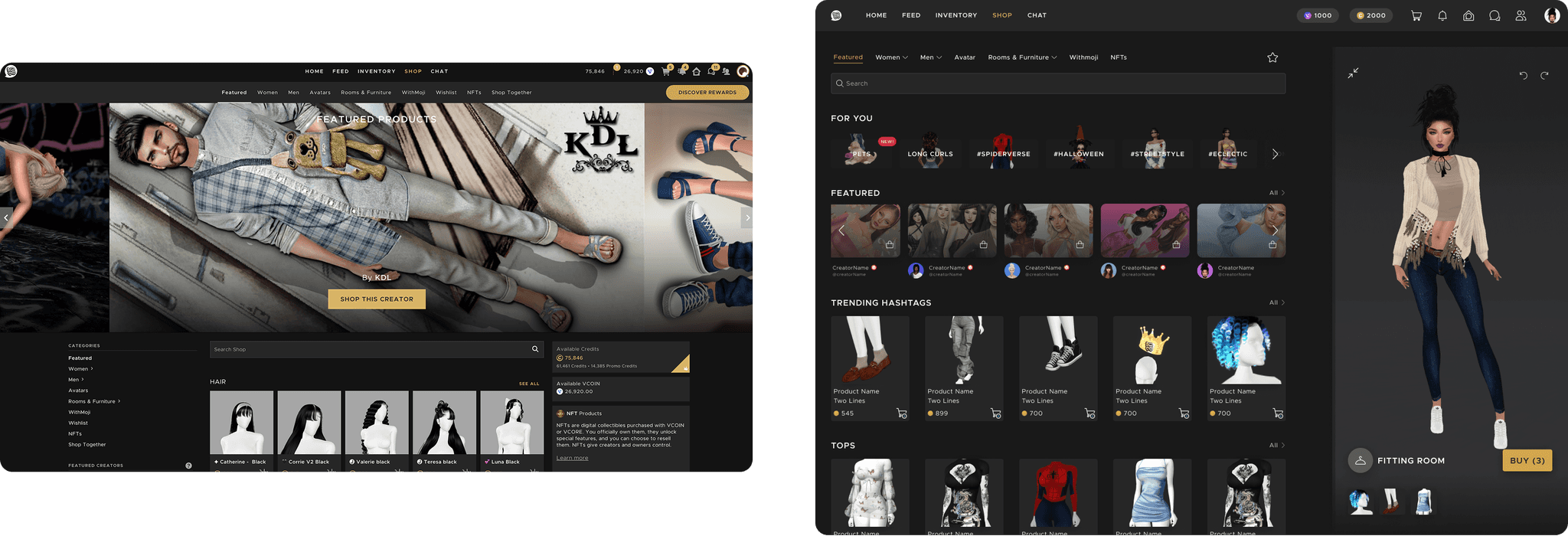
Simplify through hierarchy and removal

Challenge: Many legacy items were set in place for over 10 years such as redundant balance indicators, descriptions of tags, and other areas that were overly focused deterring users from engaging more meaningfully with the shop.


Solution: Remove many items after reviewing with stakeholders and actually requesting data from the team to determine what was low risk vs not, and reducing hierarchy of areas such as the current hero layout to showcase the catalog and future personalized content.
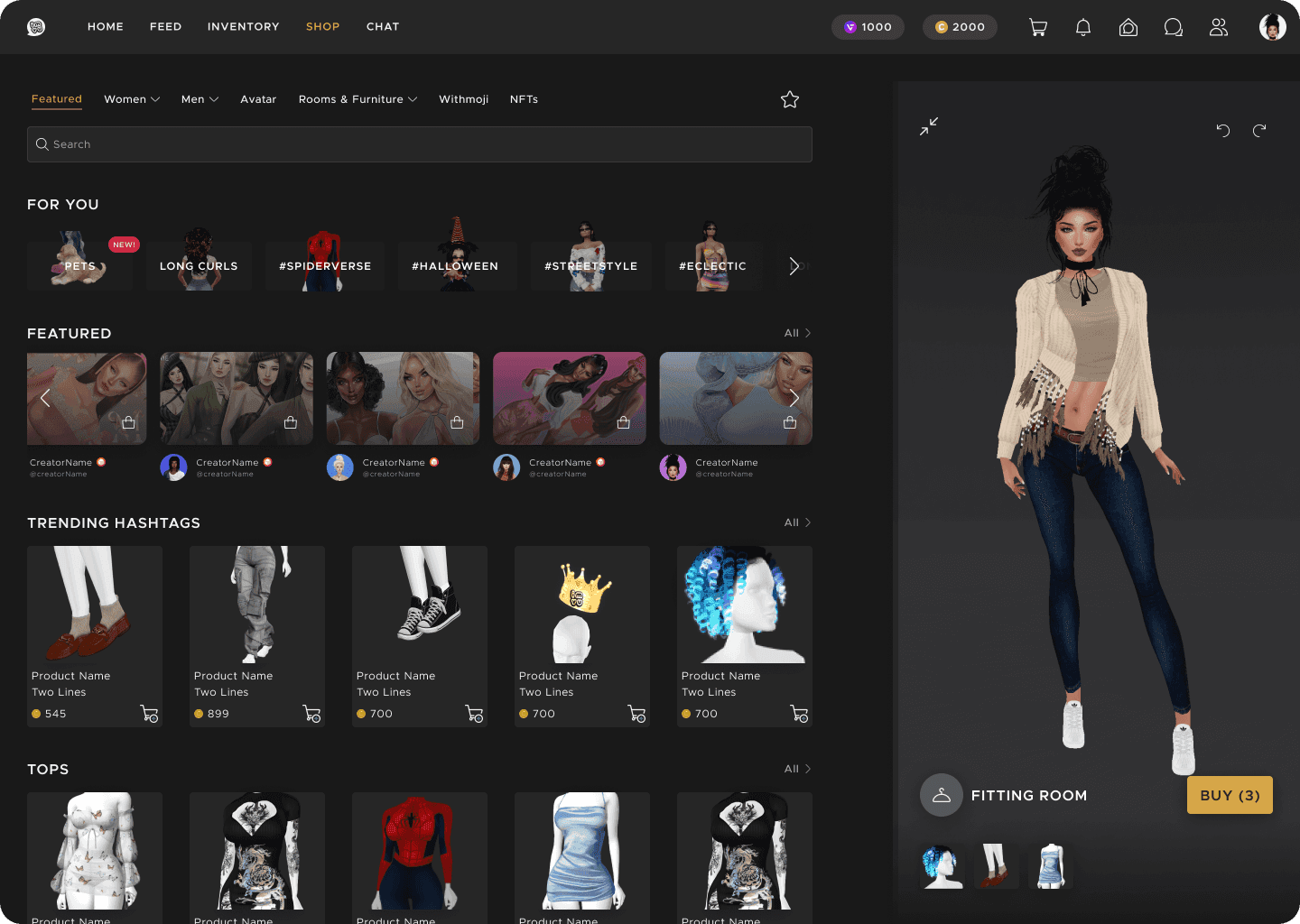
Shared view of fitting room and shop

Challenge: Avoiding bringing too many actions and complexities by always having the fitting room visible.


Solution: Limit the amount of functionality carried over while also allowing for utility to collapse/expand views and not break any existing flows. Negotiated with product on phasing in some features as adoption grew due to the UI becoming cumbersome.
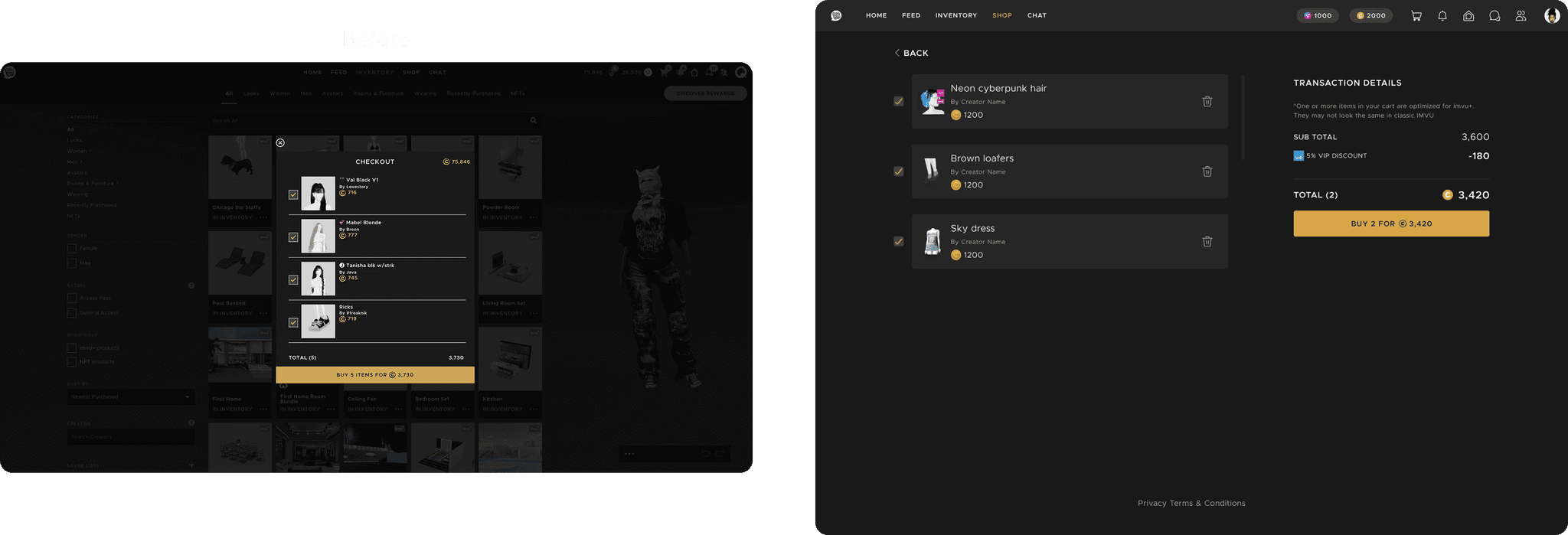
Redesigned transaction experience

Challenge: Our transaction experience was simplified into a modal interaction with very little details provided when purchasing, this made it difficult to approach this in a less complex way.


Solution: I focused on the goal of building trust and clarity for users to convert. This mean creating a checkout system that really focused on current day PoS practice where we show products, itemized criteria, pricing, discounts, totals, etc.
Creating more targeted discovery
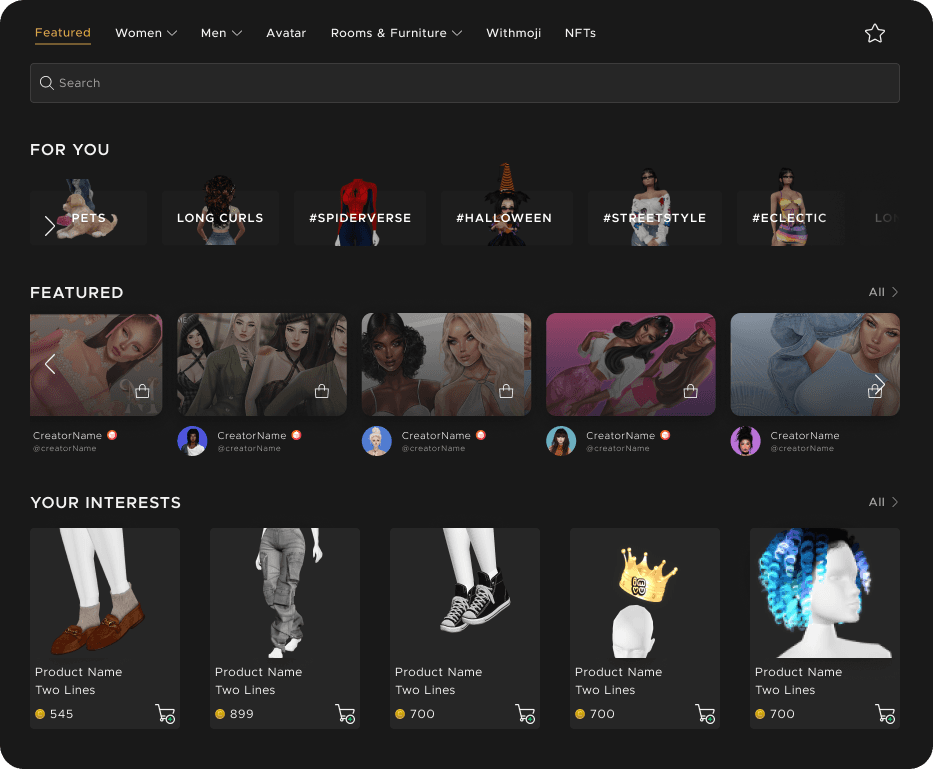
Challenge: Currently we show every user the same content based on top selling products and avatar gender that is currently being displayed. I identified that this alone is a foundational issue where both creators and customers suffer, but had to consider the technical feasibility on the engineering side.


Solution: Create ways to feature categories so we don't have to create complex data tracking for users and then tie it to creators as well. Additionally plan for the future to support with our Hashtags project to then better curate singular products more accurately to users interests and activities.


Challenge: Currently we show every user the same content based on top selling products and avatar gender that is currently being displayed. I identified that this alone is a foundational issue where both creators and customers suffer, but had to consider the technical feasibility on the engineering side.


Solution: Create ways to feature categories so we don't have to create complex data tracking for users and then tie it to creators as well. Additionally plan for the future to support with our Hashtags project to then better curate singular products more accurately to users interests and activities.

Improve filtering to support ease of use
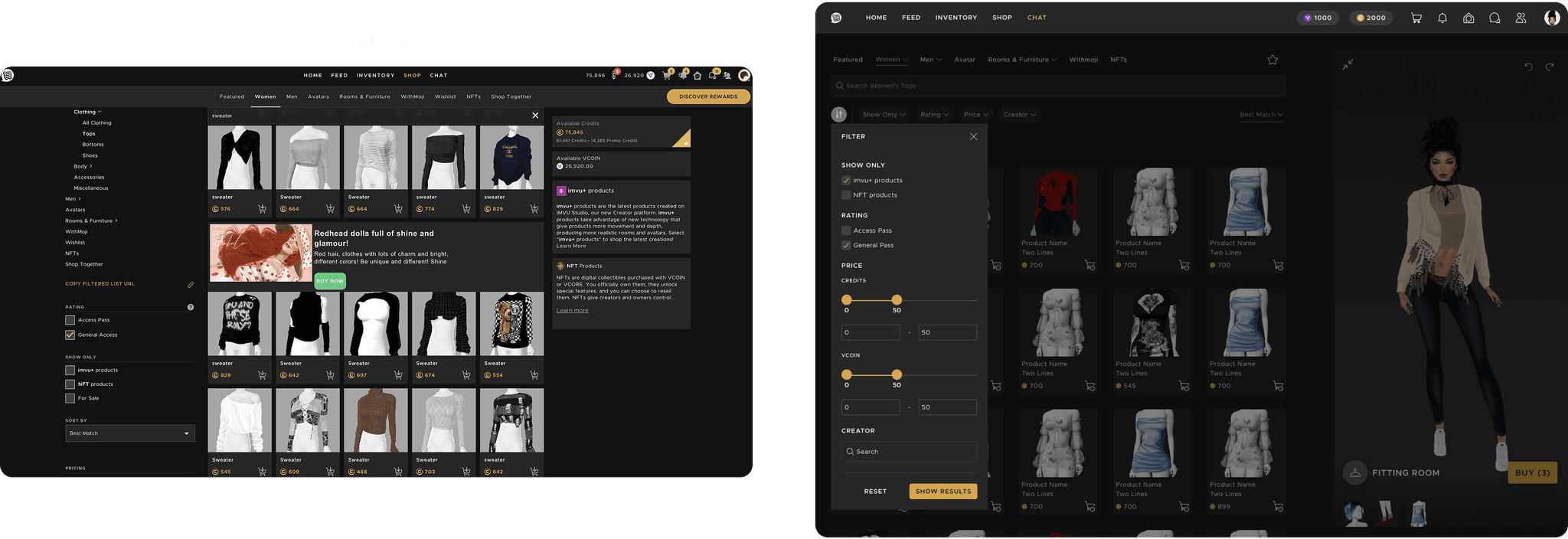
Challenge: Currently we show every user the same content based on top selling products and avatar gender that is currently being displayed. I identified that this alone is a foundational issue where both creators and customers suffer, but had to consider the technical feasibility on the engineering side.


Solution: Create ways to feature categories so we don't have to create complex data tracking for users and then tie it to creators as well. Additionally plan for the future to support with our Hashtags project to then better curate singular products more accurately to users interests and activities.


Challenge: Currently we show every user the same content based on top selling products and avatar gender that is currently being displayed. I identified that this alone is a foundational issue where both creators and customers suffer, but had to consider the technical feasibility on the engineering side.


Solution: Create ways to feature categories so we don't have to create complex data tracking for users and then tie it to creators as well. Additionally plan for the future to support with our Hashtags project to then better curate singular products more accurately to users interests and activities.

Design library integration

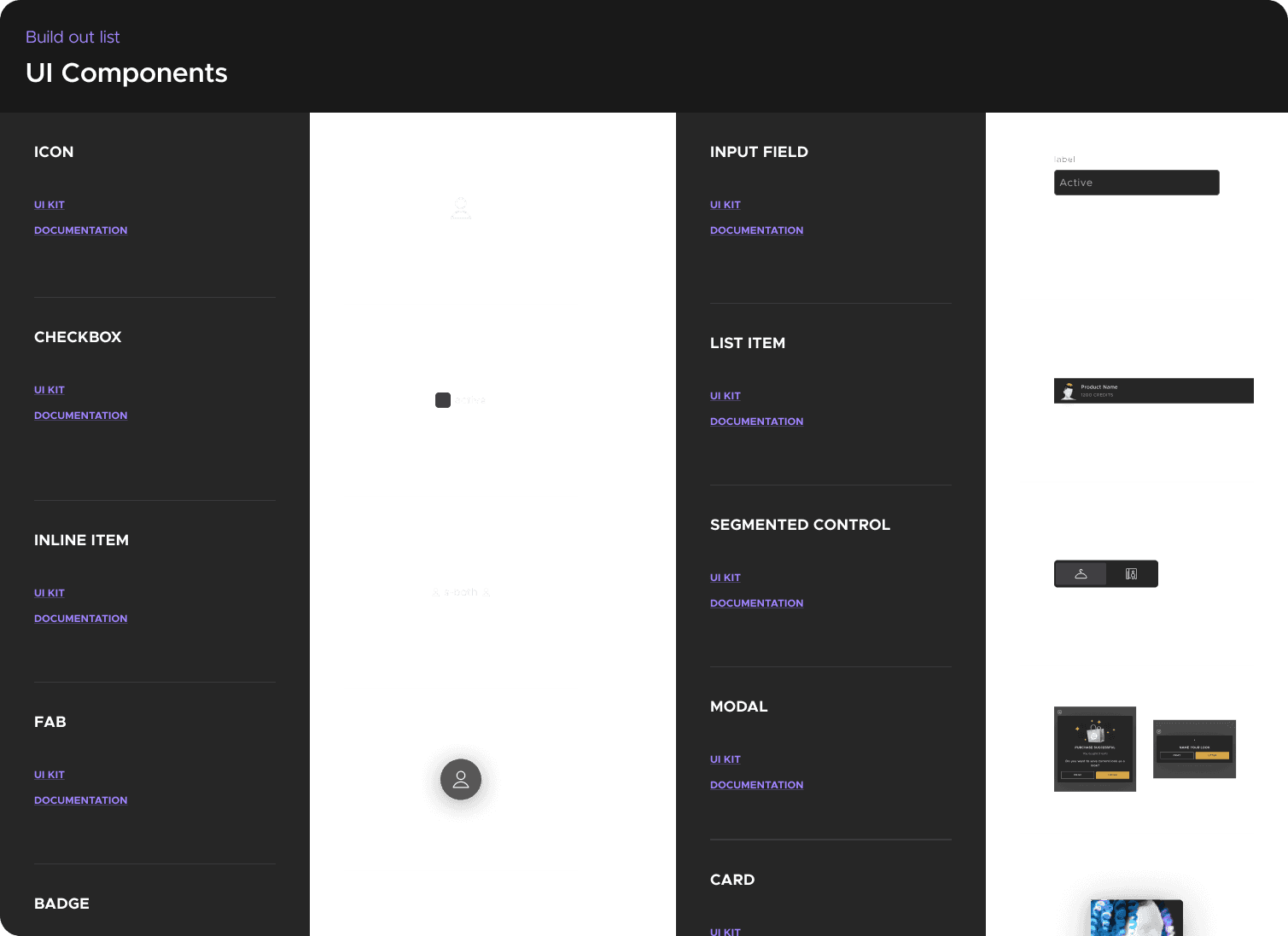
Problem: We had a lot of legacy UI on web that the code infrastructure made it difficult to adjust limiting our capability and getting strong push back from engineering.


Solution: Collaborated with engineering to identifying details on why the code refactor was creating issues and came to an alignment for manually adjusting existing code for the time being. This would get the design results we were striving for the current feature work. Additionally planned for engineering to refactor the code properly for product cards and filters at a later phase.


Extra Point: Identified the possibility of cleaning up our navigation bar experience since it housed currency and shopping cart access. Engineering confirmed it would be additional scope but doable if functionality did not change. This allowed us to take a step forward towards more universal redesign while working on Shop.

Problem: We had a lot of legacy UI on web that the code infrastructure made it difficult to adjust limiting our capability and getting strong push back from engineering.


Solution: Collaborated with engineering to identifying details on why the code refactor was creating issues and came to an alignment for manually adjusting existing code for the time being. This would get the design results we were striving for the current feature work. Additionally planned for engineering to refactor the code properly for product cards and filters at a later phase.


Extra Point: Identified the possibility of cleaning up our navigation bar experience since it housed currency and shopping cart access. Engineering confirmed it would be additional scope but doable if functionality did not change. This allowed us to take a step forward towards more universal redesign while working on Shop.

Outcome

  • 18% increase of product sales during the first month

  • 98% engagement from DAU on fitting room integration

  • 4.5% increase creator profit, this data point was still being reviewed for accuracy

  • Overall increase in shopping activity, time spent and actions increased greatly

Learnings & Reflection

  1. Mentoring a senior towards becoming a lead
    The idea of mentoring and managing an individual to level during projects that have large lifts, complexity, and relationship management obstacles is always a challenge. I feel that if I were to approach this project again I would have challenged my designer further to handle lead level decisions with engineering on some of the pushback.

  2. Plan to transition solutions to mobile where applicable
    An immediate next phase came to mind when thinking about the mobile experience. Although mobile has better performance than web, the user base is larger, my next steps would be to dive into the mobile data to identify the opportunities from the success that was made on web.


  3. Engineering understanding
    Learning more about the engineers coding obstacles with legacy frameworks that created regression issues with rendering UI we wanted to redesign was such a eye opening experience with the teams there. As each platform has different constraints, this was good for me and my team to understand how the web/desktop engineers were constrained and how to work better together with them.